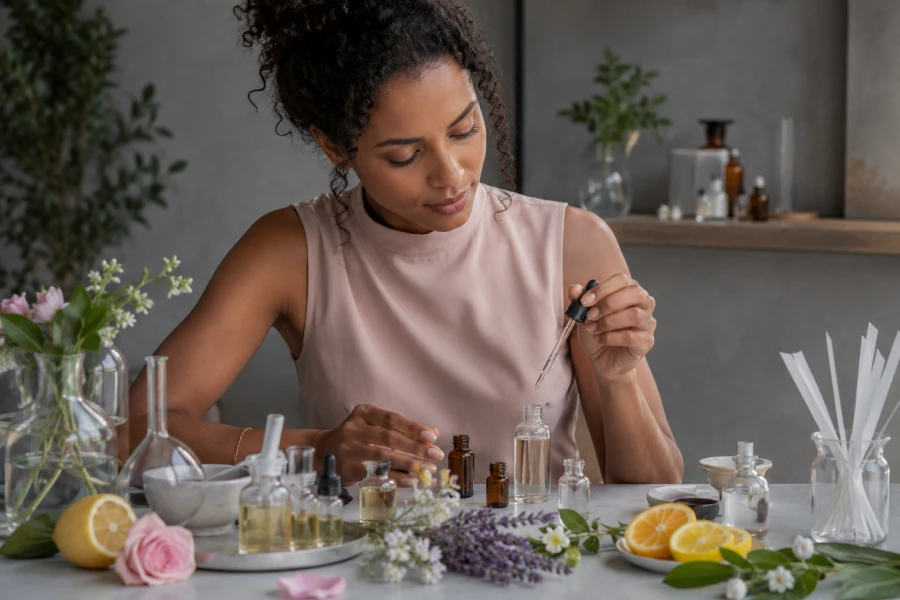
Natural perfume ingredients can make a handmade scent feel alive. They carry texture, character, and movement. Citrus can brighten a formula quickly. Herbs can make it feel clean. Flowers can add softness. Resins can give warmth. Woods can create a lasting finish. Each material brings a different emotional signal. That makes selection important. A memorable perfume usually depends on purpose, not quantity.
Every ingredient should support the mood you want. Random additions can blur a beautiful idea. A fresh scent needs lift. A cozy scent needs depth. A romantic scent needs softness. A natural aroma palette works best when each note has a reason. Purpose keeps the blend focused. It also makes the final bottle more wearable. Your nose can follow the story. That clarity gives the scent elegance.
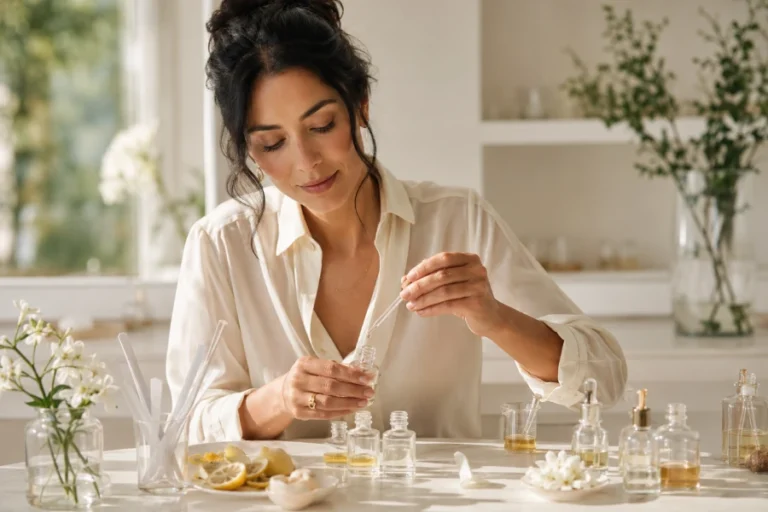
Direction also helps you shop more thoughtfully. It is tempting to buy every appealing botanical material. A focused plan keeps your collection useful. Choose ingredients that fit several ideas. Lavender, bergamot, cedar, and benzoin can appear in many formulas. Rare materials can wait until you know your style. This prevents waste and frustration. It also makes blending less chaotic. When each bottle on your table has a purpose, the creative process feels calmer.
Top notes shape the first few minutes. Lemon feels sparkling. Bergamot can feel polished. Grapefruit feels crisp and modern. Sweet orange adds friendliness. Mint can feel cool when used carefully. These notes fade faster than deeper materials. They still matter because they invite attention. A strong opening should not shout. It should welcome the wearer into the rest of the blend.
Bright notes need support because they disappear quickly. Pair citrus with herbs for freshness. Pair citrus with soft florals for polish. Pair citrus with woods for a cleaner drydown. Small experiments reveal which combinations feel natural. Too much brightness can become sharp. Too little can make the perfume feel flat. Balance is the goal. A beautiful opening should make someone want to smell the scent again. It should also lead smoothly into the heart.
The heart gives the scent emotional weight. Lavender can feel clean and calm. Geranium feels rosy and green. Jasmine can feel lush in tiny amounts. Clary sage adds a soft herbal tone. These materials support essential oil pairing when used with restraint. The heart connects the opening to the base. Without it, perfume may feel thin. With it, the blend feels complete. This middle space often carries the most personality.
Heart notes can also make a perfume feel more human. They soften the transition between fresh and deep materials. They give the wearer something to enjoy after the first sparkle fades. Floral heart notes can feel romantic. Herbal heart notes can feel clean and thoughtful. Spiced heart notes can feel warm and unusual. Use them carefully because they can dominate. A balanced heart feels present without taking over. It makes the scent feel finished.
Base notes decide what remains after the first brightness fades. Cedar can feel dry and refined. Vetiver can bring smoky elegance. Patchouli can add earthiness in tiny amounts. Benzoin gives a soft amber tone. These materials should support, not dominate. Too much depth can feel heavy. Too little can disappear quickly. Balance comes from testing. The best finish feels present but never loud.
A lasting base gives perfume confidence. It helps lighter notes stay connected. It also gives the scent a recognizable trail. However, base notes need patience. Some smell intense straight from the bottle but soften beautifully in a blend. Others become stronger after resting. Test them in tiny amounts first. Let each trial sit for several days. Natural perfume ingredients often reveal themselves slowly. The final trace should feel comfortable enough to wear for hours.
Natural materials still need careful handling. Some can irritate skin. Others may react with sunlight. Dilution helps make blending more comfortable. Research each material before using it. Patch test new formulas carefully. Avoid applying fresh tests to irritated skin. Keep bottles away from children and pets. Safety makes creativity more sustainable. A beautiful scent should feel pleasant from start to finish. Responsible use protects the wearer and the formula.
Storage matters too. Heat, light, and air can change delicate materials. Keep bottles tightly closed. Store them in a cool, dark place. Label every ingredient clearly. Write purchase dates when possible. Old materials may smell flat or strange. Freshness helps the formula perform better. Responsible handling also makes your workspace feel more professional. When safety becomes routine, creativity feels freer. You can experiment with more confidence because your process has structure.
Repeated testing reveals your scent preferences. You may love green florals. You may keep returning to citrus. You may feel best in dry woods. These choices form a recognizable style. Natural perfume ingredients can also change with the season. Spring may invite herbs and petals. Autumn may call for resin and spice. A scent layering ideas approach can expand one blend into several moods. Your vanity becomes a small archive of memory.
That archive can become surprisingly personal. One bottle may remind you of a garden. Another may feel like clean linen after rain. Another may capture a warm evening. These associations give homemade perfume emotional depth. They also make the routine more meaningful. Instead of wearing a scent because it is popular, you wear it because it connects to your life. Natural materials help create that connection. They make fragrance feel less like decoration and more like memory.

Leave a comment