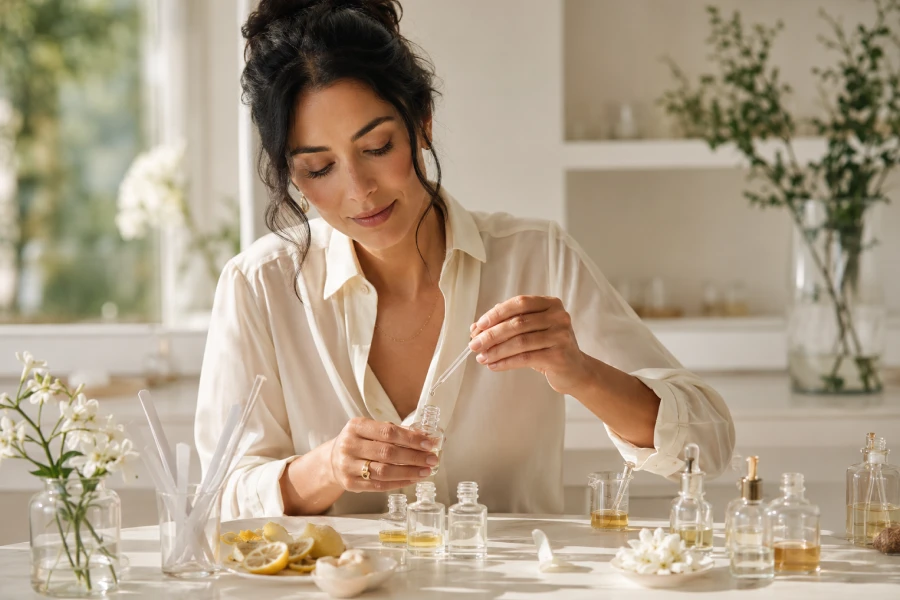
Learning how to make perfume at home gives fragrance a more private and creative meaning. You stop choosing only from finished bottles and begin shaping something with your own taste. A bright citrus note can feel energetic. A soft wood can feel grounded. A flower can feel polished without becoming formal. Each choice changes the final impression. That makes the process personal from the first test. You control strength, texture, and atmosphere. Your finished scent can match your lifestyle instead of following a trend. That sense of ownership is what makes homemade fragrance feel special.
Commercial fragrance often asks you to fit into someone else’s version of elegance. A handmade scent begins with your own preferences, memories, and daily rhythm. You notice which aromas make you feel calm. You also recognize which notes become too sharp on your skin. This makes a signature scent ritual feel thoughtful instead of random. Small edits make the formula more wearable. One drop can soften the mood. Another can add freshness. The bottle becomes a reflection of how you want to move through the day.
Personal fragrance also changes the way you shop for scent. You become more aware of structure, projection, and drydown. You understand why some perfumes disappear quickly. You learn why others feel too heavy after an hour. That knowledge gives you better taste. It also makes every experiment more useful. Instead of chasing a perfect store-bought match, you build one slowly. The process feels satisfying because the result belongs to you. Even an imperfect first blend teaches something meaningful.
Strong perfume design begins before you open a bottle. You need a clear mood first. Fresh, romantic, clean, warm, and mysterious all suggest different directions. A morning scent may need sparkle. An evening scent may need softness. A quiet everyday blend should stay close to the skin. This early choice prevents clutter. It also protects the formula from too many competing ideas. Good scent planning feels simple. Clear intention makes every ingredient easier to judge.
Try naming the feeling before naming the notes. A calm scent may suggest lavender, cedar, or soft musk-like materials. A bright scent may call for citrus, mint, or green herbs. A cozy scent may need resin, vanilla, or dry woods. This mental step keeps your blend focused. It also helps you avoid buying ingredients you will not use. A focused plan saves money and time. It gives your first bottle a stronger identity. The best homemade scents usually begin with a clear emotional direction.
A small formula usually teaches more than an overflowing blend. Choose one top note, one heart note, and one base note. Then test them together before adding anything else. This approach supports perfume blending notes without overwhelming your nose. Lemon might open the scent. Geranium can shape the middle. Cedar may hold the finish. Each part has a job. The formula stays readable. A clear blend often feels more polished than a crowded one.
Beginners often believe more ingredients create more sophistication. In practice, too many notes can make a scent muddy. Your nose loses the thread. The formula becomes harder to fix. A three-note structure gives you control. You can adjust one part without rebuilding everything. If the opening feels weak, change the top note. If the middle feels flat, adjust the heart. If the scent fades too quickly, strengthen the base. Fewer notes make every choice easier to understand.
Paper testing saves time, materials, and frustration. Smell each strip after one minute. Return after ten minutes. Check again after thirty minutes. Many beautiful openings fade into weak finishes. Some ordinary starts become surprisingly smooth later. Skin testing comes after paper testing. Warmth changes how notes behave. Your skin may sweeten, sharpen, or soften a blend. Patient testing protects your final bottle from rushed decisions.
Your nose also needs breaks. Smelling too many materials at once can make everything seem dull. Step away from the table when notes start blurring together. Drink water. Open a window. Return after a short pause. This simple reset improves judgment. It also makes the process more enjoyable. Testing should feel curious, not pressured. When you give the formula time, you notice details that would otherwise disappear. Those details often decide whether a scent feels wearable.
Every successful test needs a written record. Write the date, base, notes, and exact drops. Add your first impression immediately. Then add another impression after resting. This habit turns experiments into repeatable formulas. It also makes mistakes useful. A perfume journal helps you see patterns over time. You may discover that herbs need restraint. You may notice that woods suit your skin. Those discoveries build confidence.
Good records also protect your best surprises. Sometimes a beautiful blend happens unexpectedly. Without notes, you may never recreate it. A journal gives each experiment a place to live. It can include ratios, resting time, base type, and skin impressions. It can also include emotional reactions. Maybe one blend feels too serious. Maybe another feels perfect for summer mornings. These comments matter. Fragrance is technical, but it is also personal. Your notes should capture both sides.
The most satisfying blends often come from repeated practice. You begin smelling ingredients with more focus. You learn when to stop adding more. You recognize the difference between bright and sharp. You also understand the difference between soft and flat. This is where how to make perfume at home becomes a lasting creative habit. Seasonal versions can keep the process fresh. A travel scent can feel lighter. A weekend scent can feel warmer. Over time, fragrance becomes part of your personal language.
That language can evolve with your life. You may want a clean scent for work. You may want a warmer blend for quiet evenings. You may create a fresh formula for spring and a deeper one for winter. Each bottle becomes a small chapter. The process stays practical because you can keep formulas simple. It also stays emotional because scent carries memory so easily. When homemade fragrance becomes routine, the vanity feels more personal. It holds choices, experiments, and moods that belong to you.

Leave a comment