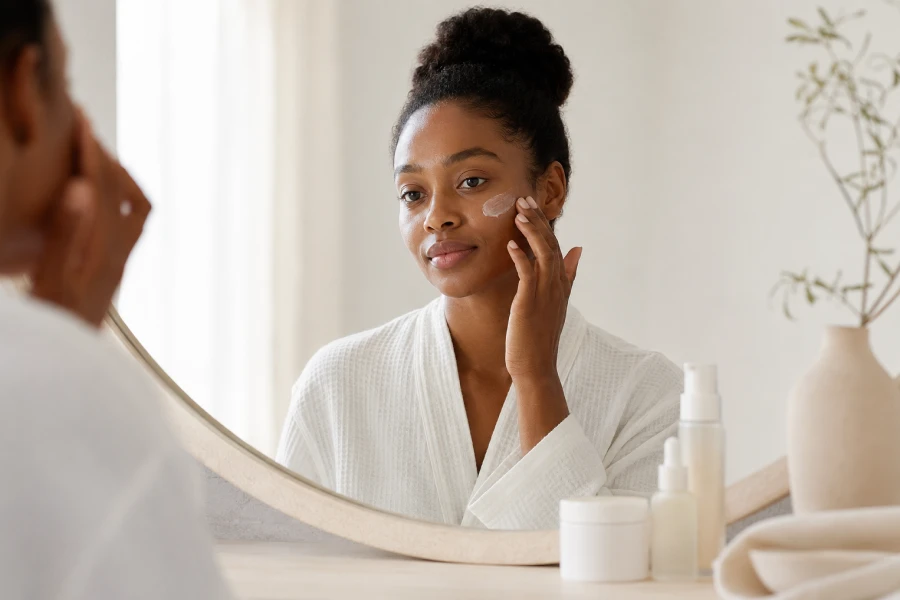
A sensitive skin routine should help the face stay calm before irritation becomes obvious. Many people simplify only after redness appears. By then, the skin may already feel warm or tight. A better plan builds prevention into ordinary steps. Gentle cleansing matters. Moisture matters. Sun protection matters. Product consistency matters more than product excitement. The routine should feel easy to repeat. Calm skin often begins before the mirror shows a problem.
Predictability reduces confusion. Constant changes make reactions hard to trace. You may blame the wrong product. You may also overcorrect. A steady skin calming routine gives the barrier time to settle. It also gives you clearer feedback. Cleanse gently. Moisturize consistently. Protect with sunscreen. Repeat the basics. Sensitive skin often improves when the routine stops surprising it.
This predictability does not need to feel restrictive. It simply gives your skin a stable baseline. Once you know the baseline, you can test changes carefully. You can tell whether a new product helps or hurts. You can also return to safety after a reactive day. That return point matters. Sensitive skin feels less stressful when you know what calms it. A predictable routine becomes a kind of skincare map. It shows you where to begin again.
Mornings should begin with the gentlest useful option. Some days need a mild cleanser. Other days need only water. Listen to tightness, redness, and comfort. Apply moisturizer before the skin feels dry. Add sunscreen after it settles. Avoid rubbing products aggressively. Let each layer absorb. Use soft towels. Keep the process brief. A calm morning gives the face a better start.
The goal is protection, not performance. A sensitive face may not tolerate a long morning lineup. Too many layers can pill, sting, or feel heavy. Choose formulas that work together smoothly. Let your hands move slowly. Use enough product without dragging the skin. If sunscreen stings, consider whether the moisturizer underneath has fully settled. Small adjustments can make daily use easier. A good morning routine should feel almost uneventful. That quiet feeling is often a sign of success.
Reactive weeks need fewer decisions. Pause exfoliating acids. Pause strong retinoids. Pause scented extras. Keep cleanser, moisturizer, and sunscreen. A fragrance-free skincare approach can reduce avoidable triggers. Use lukewarm water. Avoid cleansing brushes. Skip new products until comfort returns. A smaller routine is not failure. It is a smart adjustment. The skin often needs space more than stimulation.
Reactive weeks can happen for many reasons. Weather changes can increase dryness. Stress can make skin feel less tolerant. Hormonal shifts can affect sensitivity. Travel can introduce new water, climate, and products. Do not assume the routine has failed immediately. Simplify first and observe. Keep notes if flares repeat. Mention sleep, weather, food changes, and new products. Patterns may appear. A sensitive skin routine should respond to these shifts without panic.
New products do not need to feel like a gamble. Apply a small amount to a discreet area. Watch for redness, itching, burning, or bumps. Repeat when possible. Some reactions appear slowly. Patience protects your face. Write down what you tested. Mention the date and area. Compare results before full use. This simple method lowers anxiety around change.
Patch testing also slows down impulse purchases. A product may look perfect online. Your skin may disagree. Testing gives you a private preview before full application. It also helps you separate excitement from compatibility. If a product causes discomfort, stop early. If it feels fine, introduce it slowly. Use it on calm days first. Avoid starting several new products together. This careful pace protects the routine you already built. It makes experimentation feel controlled instead of risky.
Texture affects consistency more than people expect. Sticky products can feel annoying. Heavy products can feel distracting. Harsh foaming products can feel drying. Comfortable textures encourage repeat use. A patch testing skincare habit helps you evaluate texture and tolerance together. Notice how the face feels after ten minutes. Notice again after several hours. Good products feel quiet after application. That quietness supports long-term use.
Texture should match both skin and lifestyle. A rich moisturizer may help at night but feel too heavy under sunscreen. A watery serum may feel fresh but not provide enough comfort. A cleanser may feel pleasant until it leaves tightness later. These details matter because routines succeed through repetition. If a product feels irritating or unpleasant, you may avoid it. Choose textures that make care easier. The right feel can turn skincare from a chore into a calm habit.
Your routine can evolve without becoming chaotic. Add one product at a time. Keep the foundation unchanged. Wait before judging results. Avoid combining several new actives. Sensitive skin routine improvements often come from careful pacing. A hypoallergenic routine mindset keeps choices selective. Trends can wait. Comfort should lead. Over time, your routine becomes personal, steady, and easier to trust.
Growth should feel deliberate. You may eventually add a calming serum. You may try a gentle exfoliant. You may introduce a richer night moisturizer for colder months. Each change should have a purpose. Keep the basics steady while testing. Let your skin tell you whether the new step deserves a place. A sensitive skin routine works best when it grows from experience. It becomes stronger because every product earns its role. That is how calm care becomes sustainable.




Leave a comment